segunda-feira, 5 de novembro de 2007

World Without End


Editorial Reviews
Book Description
Ken Follett has 90 million readers worldwide. The Pillars of the Earth is his bestselling book of all time. Now, eighteen years after the publication of The Pillars of the Earth, Ken Follett has written the most-anticipated sequel of the year, World Without End.

In 1989 Ken Follett astonished the literary world with The Pillars of the Earth, a sweeping epic novel set in twelfth-century England centered on the building of a cathedral and many of the hundreds of lives it affected. Critics were overwhelmed--"it will hold you, fascinate you, surround you" (Chicago Tribune)--and readers everywhere hoped for a sequel.

World Without End takes place in the same town of Kingsbridge, two centuries after the townspeople finished building the exquisite Gothic cathedral that was at the heart of The Pillars of the Earth. The cathedral and the priory are again at the center of a web of love and hate, greed and pride, ambition and revenge, but this sequel stands on its own. This time the men and women of an extraordinary cast of characters find themselves at a crossroad of new ideas--about medicine, commerce, architecture, and justice. In a world where proponents of the old ways fiercely battle those with progressive minds, the intrigue and tension quickly reach a boiling point against the devastating backdrop of the greatest natural disaster ever to strike the human race--the Black Death.

Three years in the writing, and nearly eighteen years since its predecessor, World Without End breathes new life into the epic historical novel and once again shows that Ken Follett is a masterful author writing at the top of his craft.

Questions for Ken Follett

Amazon.com: What a phenomenon The Pillars of the Earth has become. It was a bestseller when it was published in 1989, but it's only gained in popularity since then--it's the kind of book that people are incredibly passionate about. What has it been like to see it grow an audience like that?

Follett: At first I was a little disappointed that Pillars sold not much better than my previous book. Now I think that was because it was a little different and people were not sure how to take it. As the years went by and it became more and more popular, I felt kind of vindicated. And I was very grateful to readers who spread the news by word of mouth.

Amazon.com: Pillars was a departure for you from your very successful modern thrillers, and after writing it you returned to thrillers. Did you think you'd ever come back to the medieval period? What brought you to do so after 18 years?

Follett: The main reason was the way people talk to me about Pillars. Some readers say, "It’s the best book I’ve ever read." Others tell me they have read it two or three times. I got to the point where I really had to find out whether I could do that again.

Amazon.com: In World Without End you return to Kingsbridge, the same town as the previous book, but two centuries later. What has changed in two hundred years?

Follett: In the time of Prior Philip, the monastery was a powerful force for good in medieval society, fostering education and technological advance. Two hundred years later it has become a wealthy and conservative institution that tries to hold back change. This leads to some of the major conflicts in the story.

Amazon.com: World Without End features two strong-willed female characters, Caris and Gwenda. What room to maneuver did a medieval English town provide for a woman of ambition?

Follett: Medieval people paid lip-service to the idea that women were inferior, but in practice women could be merchants, craftspeople, abbesses, and queens. There were restrictions, but strong women often found ways around them.

Amazon.com: When you sit down to imagine yourself into the 14th century, what is the greatest leap of imagination you have to make from our time to theirs? Is there something we can learn from that age that has been lost in our own time?

Follett: It’s hard to imagine being so dirty. People bathed very rarely, and they must have smelled pretty bad. And what was kissing like in the time before toothpaste was invented?

From Publishers Weekly
Eighteen years after Pillars of the Earth weighed in with almost 1,000 pages of juicy historical fiction about the construction of a 12th-century cathedral in Kingsbridge, England, bestseller Follett returns to 14th-century Kingsbridge with an equally weighty tome that deftly braids the fate of several of the offspring of Pillars' families with such momentous events of the era as the Black Death and the wars with France. Four children, who will become a peasant's wife, a knight, a builder and a nun, share a traumatic experience that will affect each of them differently as their lives play out from 1327 to 1361. Follett studs the narrative with gems of unexpected information such as the English nobility's multilingual training and the builder's technique for carrying heavy, awkward objects. While the novel lacks the thematic unity of Pillars, readers will be captivated by the four well-drawn central characters as they prove heroic, depraved, resourceful or mean. Fans of Follett's previous medieval epic will be well rewarded. (Oct.)
Copyright © Reed Business Information, a division of Reed Elsevier Inc. All rights reserved.

Details
  • Hardcover: 1024 pages
  • Publisher: Dutton Adult (October 9, 2007)
  • Language: English
  • ISBN-10: 0525950079
  • ISBN-13: 978-0525950073
  • Product Dimensions: 9.3 x 6.5 x 2 inches


Customer Reviews
Well worth the wait ! ! ! ! !
By Lesley West
I am a big fan of Ken Follett, and admire that he moves in a seemingly effortless manner between genres. However, his best work is found in the "great historical novel", and he has delivered handsomely with this latest effort.

This is being touted as a sequel to "The Pillars of the Earth" which is true enough, but it is also a little misleading, as it is set 200 years after the tales told in that magnificent novel, and as such can definitely be read as a stand alone novel. Having said that though, if you haven't read "Pillars of the Earth" - do - it is magnificent!

Knowledge of this wonderful earlier work will be helpful, as there is reference to characters from that time and being familiar with their adventures certainly gives you some insight into what is happening at the time, but if you are new to Follett's work, please don't let this put you off. He mentions enough of the earlier characters (without being boring to those readers who know the book SO well)for any new reader to have an idea of what has happened before.

The tale seems simple enough - 4 very different young people witness a fight in the forrest which leads to death and the hiding of a great secret, and this reverberates through their lives for years to come. What is not simple enough is the detail that goes in to these character's lives - they are all wonderful in their own different ways, and we can all feel that we can see the world they live in, taste their food, smell the odours of their environment and rejoice and mourn as they do.

Follett is also the master of understanding how humans think; how they plot and scheme, and how the whims of fate can change a life that seems completely planned and organised. And all of this in a magnificent medieval setting with court intrigue, pious devotion, illness and the whims of nature! What more could you want?

If you like a good hefty historical novel with a great plot, detailed environment and well drawn and very engaging characters, you will NOT be disappointed. It is wonderful and I recommend it highly.


The more things change, the more they stay the same. A rehashing of "Pillars two hundred years and one black plague later
By Lilly Flora "lsdstitch"
Reading "The Pillars of the Earth" was one of the happiest accidents in my reading career. I picked it up on a whim because of the cathedral on the cover and the word "epic" in a review. I had no idea it would turn out to be one of the best books I ever read, not on in terms of plot but completeness and the overall message of world change it puts out. So when I found out about the sequel I was thrilled. I ordered it two years in advance.

But I was disappointed. While "World without End" is compelling stuff with endless twists in it's storyline and characters you grow fond of, this book just doesn't have that epic pizzazz that "Pillars" had in spades. A lot of the events in this book seem to be rehashed from its predecessor and now that the cathedral is built it seems that the major issues facing Kingsbridge (like becoming a town in its own right, having a cathedral at all) are over and done with. "Pillars" was at its heart a book about creation and the forces of the time that caused that-the church, the ruling class, the merchants, even the peasents. Its a book about a developing society that is setteling down not only from the recent Norman invasion, but is gearing up to be one of the greatest empires the world will ever see (even though that happens hundreds of years later.) This book has no unifying theme that creates the epic feel that "Pillars" had-the sense that you were reading about something great (though fictional) in history.

Anyway the basic plot follows the formula from "Pillars." We start out with a piece of a mystery that gradually revels clues to us as we read on. In this case, four children, two sons of an impoverished knight, (Ralph and Merthin) one wealthy daughter of a prosperous wool merchant (Caris) and a dirt poor urchin girl who steals so her family can live (Gwenda), witness a man attacked in the woods because of a letter he is carrying. This experience binds the children for life-along with that of the attacked knight (Thomas) who becomes a monk so he is beyond the reach of whoever tried to kill him.

Of course we don't know what's in the letter, just that it has something to do with the death of King Edward II (the gay one who was disposed by his Queen and her lover so her son could rule) and if it's found heads will (literally) role.

But this mystery is secondary, almost a non-presence in the book compared to the drama of Jack's father's death in "Pillars." Also our main characters are like paler versions of the characters we loved and hated in "Pillars." Merthin is Jack, the fantastic, romantic builder with an almost supernatural ability with stone, Ralph is William, the corrupt knight with no moral center, Caris is Aliena, strong and with more business sense and determination than any women of the time, and Gwenda-well she's an entirely new character but she features so little it doesn't even matter.

My point is this-there isn't a whole lot that's original in this book. The romance is nowhere near as spellbinding as the tortured and blinding love the perfect Jack and Aliena from "Pillars" had. In fact, its two hundred years later and no Kingsbridge is one of the largest cities in England instead of a struggling town, but everything seems the same. The same conflicts happen again and again, the same character struggles. The only real difference is the emergence of the Black Death some lesbianism and a well described and probably realistic battle of the priory against the town (which frankly made me sad because Prior Phillip from "Pillars" would be so sad at how the monastery developed.)

I'm not saying this is a bad book, its even compelling at times. But compared to "Pillars" it is a poor imitation of an almost perfect historical fiction novel. Who knows, maybe if you read this before Pillars (they aren't reliant on each other enough that order matters) it would seem like a better book then it is. But really, I expected more. I would put this on par with Follett's other two historical novels, "A Place Called Freedom" and "A Dangerous Fortune" but it's not in the same class as "The Pillars of the Earth."

Of course not very many books are. Maybe one in a million.

So the real test, would I read this again. Sure. It was good after all-but it didn't live up to expectations created by "Pillars."


Deceptively Delicious


Simple Secrets to Get Your Kids Eating Good Food
by Jessica Seinfeld

Book Description

It has become common knowledge that childhood obesity rates are increasing every year. But the rates continue to rise. And between busy work schedules and the inconvenient truth that kids simply refuse to eat vegetables and other healthy foods, how can average parents ensure their kids are getting the proper nutrition and avoiding bad eating habits?

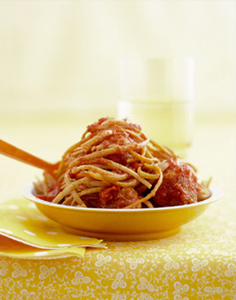
As a mother of three, Jessica Seinfeld can speak for all parents who struggle to feed their kids right and deal nightly with dinnertime fiascos. As she wages a personal war against sugars, packaged foods, and other nutritional saboteurs, she offers appetizing alternatives for parents who find themselves succumbing to the fastest and easiest (and least healthy) choices available to them. Her modus operandi? Her book is filled with traditional recipes that kids love, except they're stealthily packed with veggies hidden in them so kids don't even know! With the help of a nutritionist and a professional chef, Seinfeld has developed a month's worth of meals for kids of all ages that includes, for example, pureed cauliflower in mac and cheese, and kale in spaghetti and meatballs. She also provides revealing and humorous personal anecdotes, tear–out shopping guides to help parents zoom through the supermarket, and tips on how to deal with the kid that "must have" the latest sugar bomb cereal.

But this book also contains much more than recipes and tips. By solving problems on a practical level for parents, Seinfeld addresses the big picture issues that surround childhood obesity and its long–term (and ruinous) effects on the body. With the help of a prominent nutritionist, her book provides parents with an arsenal of information related to kids' nutrition so parents understand why it's important to throw in a little avocado puree into their quesadillas. She discusses the critical importance of portion size, and the specific elements kids simply must have (as opposed to adults) in order to flourish now and in the future: protein, calcium, vitamins, and Omega 3 and 6 fats.

Jessica Seinfeld's book is practical, easy–to–read, and a godsend for any parent that wants their kids to be healthy for a long time to come.


“Deceptively Delicious: Simple Secrets to Get Your Kids Eating Good Food” by Jessica Seinfeld

October 8-19, 2007

Deceptively DeliciousChildhood obesity rates are increasing every year. Between busy work schedules and the inconvenient fact that kids simply refuse to eat vegetables, how can average parents ensure their kids get the proper nutrition?

As a mother of three, Jessica Seinfeld can speak for all parents who deal nightly with dinnertime fiascos. Deceptively Delicious is filled with traditional recipes that kids love, except they’re stealthily packed with veggies so kids don’t even know! With the help of a nutritionist and a professional chef, Seinfeld has developed a month’s worth of meals for kids of all ages that includes, for example, pureed cauliflower in mac and cheese, and kale in spaghetti and meatballs. She also provides tear–out shopping guides and tips on how to deal with the kid that “must have” the latest sugar bomb cereal. Deceptively Delicious is practical, easy-to-read, and a godsend for any parent that wants their kids to be healthy for a long time to come.

Oct 8: Baggage made the Chicken Salad recipe, and says “Man, I love this book. I love the design of it (it’s pink and I dig that), the spiral bound pages which lay flat, the nutritional information, the beautiful photographs, and the fact that I served up an entire head of cauliflower and no one knew. Now that is awesome.”

Oct 9: Wonder Mom’s son loved the Buttered Noodles. She says “I love these foods too, and I feel good knowing when I’m scarfing down a couple chocolate chip cookies that I’m not going to feel like crap afterwards, because there was actually some protein and fiber in the things.” And after making the Quesadillas with Guacamole Dip, Crazy MomCat says “I am now most adamantly ‘pro-puree.’ I can say that proudly without fear of retaliation from anti-puree extremists. Because, honestly, these recipes are GREAT!”

Oct 10: Moving Mama tried the recipe for Pumpkin and French Toast, and says “Who would have thought? The kiddies seem to be okay with my first try at this…and who knows - maybe I can keep it going?!?” And Life & Times says “It’s genius, and I get a twisted satisfaction in tricking my finicky toddler … By the way, Pink Pancakes are G, Double-O, D…. GOOD!”

Oct 11: Redhead Princess says “The donuts (with sweet potato and pumpkin) will change your life.” And Gotcha Baby says “The recipe I will use the most? The recipe for homemade ketchup. Crazy, but remember I feed a two year old on a daily basis. Now instead of dipping her hot dog in high-fructose corn syrup with tomatoes, she is dipping her hot dog in tomatoes and carrots. And she loves it!”

Oct 12: Feed Your Loves says “Once you get the jist of making and sneaking the purees, you’ll be able to add them to almost any dish; Deceptively Delicious, it seems, is interested in teaching you to cook in your own skin, at your own table, just better!” Mama Need Coffee says “I decided to give it a go and use the recipe for chicken nuggets. Then something miraculous happened. They ate it. No, really! They ate all of it. And liked it.” And Did You See That? tried quite a few recipes, and says “My husband, and I (who also need to eat more vegetables) love these recipes. The vegetables are cleverly hidden and indistinguishable from the rest of the ingredients.”

Oct 15: Wit’s End tried the Banana Bread recipe, and says “Not only are these recipes deceptive, they incorporate other great ingredients: whole wheat flour, healthy oils, egg whites.” My Little Patch of Sunshine enlisted her kids, who wanted to try the Chicken Alphabet Soup. She says “The recipe is very simple (broth, chicken, pasta and the purees) but it tasted good. Both boys liked it, and I never thought of adding puree into chicken soup before — usually I just add chopped carrots.”

Oct 16: No Lemon Juice tried the Pumpkin Oatmeal. Her verdict? “Really freaking good. This was a win on several fronts. One, vegetable for breakfast. Two, I always, always, always have leftover oatmeal from the holiday baking season. Three, it was so easy to make, maybe 5-7 minutes from the time I started to the time the spoon hit my mouth. Plus with the regular oats and not the instant kind, there is more fiber and better carb-wise.” Though Suburban Turmoil couldn’t work up the courage to make spinach-laced brownies, she was amazed by the applesauce muffins. “I was quite excited about trying the applesauce muffins on my three-year-old and I’m happy to say that she loved them! And since they were packed with oats, skim milk and applesauce, I loved them, too!”

Oct 17: Life in the Hundred-Acre Wood eschewed her normal Morningstar Nuggets for Seinfeld’s tofu nuggets with great success. She also tried a dipping sauce. “I also tried the Ranch Dressing. Both of my kids love to dunk veggies in dip, and what I liked about this recipe, again, is that it’s made of natural ingredients, with beans mixed in for an extra protein punch. I’ll definitely be packing both the Tofu Nuggets and the Ranch Dressing in hundreds of future school lunches.” Esperanza laments the picky-eating that she may have passed on to her children, but comments that the book is just as helpful to feeding the whole family in addition to her children. “And to be absolutely truthful, I need the veggie-camouflage just as much as she does. Not because I don’t care about my health, but because I’ve had sensitive taste buds my whole life, and I know my girl does too. My eating habits have definitely gotten much better since I had the girls, but there’s still some strong flavors (like spinach and broccoli) that I’ll just never be able to swallow, unless they come disguised in brownies and muffins.”

Oct 18: Parenting Children was a little wary about adding chickpeas to chocolate chip cookies but marveled at the results. “This book also has great ways to hide vegetables in desserts, where I can say I had never thought of hiding them. My kids and I made chocolate chip cookies complete with oats and whole chickpeas. I thought there was no way these could be good, I mean it had whole chickpeas in it! They were very good and my kids devoured them.” Life With Heathens was surprised by her family’s willingness to try the recipes, and had great success with the riceball recipe. “It got my five year old to look through the book and actually ask me to make him many of the recipes just because the pictures looked “yummy.” After I informed him that you put butternut squash, cauliflower, and even carrots in some of the recipes he believe it or not still wanted me to make them! When I told my two teenagers about the recipes they informed me that as long as it didn’t taste or look funny they didn’t care. So with all that in mind I decided it was time for me to try to do some “deliciously deceptive” cooking!”

Oct 19: The Opinionated Parent marveled at the tastiness and ease of the recipes. “I tried a couple of the recipes and plan to try many more. My faves so far are the French toast (with pumpkin puree in the eggs), scrambled eggs (with pureed cauliflower that you totally can’t taste) and pita pizzas (which we make all the time but now will be spreading spinach puree on) and macaroni and cheese (with butternut squash). The four recipes I had time to try all took just a few minutes and hardly any work. And yes - they were delicious!” Stirrup Queens has had success with alternative pancake recipes in the past so she started with Seinfeld’s pancakes (with added sweet potato). “He was a little suspicious at first–the colour is a bit off from normal pancakes–and watched me bustle about the kitchen in an attempt to hide my guilty face. But then he started eating them absentmindedly, chatting on about cell phones and iPods while he emptied his plate.”


Deceptively Delicious: Simple Secrets to Get Your Kids Eating Good Food

Editorial Reviews
Book Description
It has become common knowledge that childhood obesity rates are increasing every year. But the rates continue to rise. And between busy work schedules and the inconvenient truth that kids simply refuse to eat vegetables and other healthy foods, how can average parents ensure their kids are getting the proper nutrition and avoiding bad eating habits?

As a mother of three, Jessica Seinfeld can speak for all parents who struggle to feed their kids right and deal nightly with dinnertime fiascos. As she wages a personal war against sugars, packaged foods, and other nutritional saboteurs, she offers appetizing alternatives for parents who find themselves succumbing to the fastest and easiest (and least healthy) choices available to them. Her modus operandi? Her book is filled with traditional recipes that kids love, except they're stealthily packed with veggies hidden in them so kids don't even know! With the help of a nutritionist and a professional chef, Seinfeld has developed a month's worth of meals for kids of all ages that includes, for example, pureed cauliflower in mac and cheese, and kale in spaghetti and meatballs. She also provides revealing and humorous personal anecdotes, tear–out shopping guides to help parents zoom through the supermarket, and tips on how to deal with the kid that "must have" the latest sugar bomb cereal.

But this book also contains much more than recipes and tips. By solving problems on a practical level for parents, Seinfeld addresses the big picture issues that surround childhood obesity and its long–term (and ruinous) effects on the body. With the help of a prominent nutritionist, her book provides parents with an arsenal of information related to kids' nutrition so parents understand why it's important to throw in a little avocado puree into their quesadillas. She discusses the critical importance of portion size, and the specific elements kids simply must have (as opposed to adults) in order to flourish now and in the future: protein, calcium, vitamins, and Omega 3 and 6 fats.

Jessica Seinfeld's book is practical, easy–to–read, and a godsend for any parent that wants their kids to be healthy for a long time to come.

Bob Greene, author of The Best Life Diet:
"I found the techniques for adding vegetables to meals extremely creative and the recipes fantastic! Deceptively Delicious is a must have for your healthy kitchen."

Questions for Jessica Seinfeld

Amazon.com: My seven-year-old inspects the food on his plate like a hawk (if there was a hawk that only ate bagels and macaroni). Anything with the least bit of color goes untouched. What's a mom or dad to do?

Seinfeld: Two of my three children were exactly the same way. The vegetables, which I worked hard to prepare, not only went untouched, they were often insulted ("Eeewww...!"). And the harder I pushed them to eat good food, the harder they pushed back. We were literally ruining each other's meals.

That conflict was the inspiration for the book. I realized I wasn't going to win the power struggle, so I decided to join them on their turf. I started with the foods they would eat (chicken nuggets, tacos, macaroni and cheese) and I added a pureed vegetable of the same color. So if your child only eats macaroni and cheese (or noodles and butter), you should add cauliflower or yellow squash puree, which utterly disappears. Everyone wins: they get the nutrition they need and you get the satisfaction of doing a better job as a parent.

Amazon.com: That same picky second-grader will often try something new one time and declare he likes it, but the next time we serve it, he seems to have lost his spirit of adventure and won't eat it again. Any advice?

Seinfeld: First and foremost, remember that not every meal you prepare for a child will be a success. Kids at this age are naturally testing preferences, pushing boundaries, and changing their minds. That's part of their development and those are urges not worth battling. As I learned the hard way, the more pressure you apply, the more kids will "hate" certain foods. And, while it would be nice if kids had a "spirit of adventure" when it comes to food, I've found it's best to eliminate adventure and stick to the basics--foods they already love, laden with added nutrition they don't know is there. Finally, be consistent, firm and patient. I have a rule in my house: you don't have to eat what's on the plate, but what's on the plate is all that's being served. Eventually, they come around.

Amazon.com: Are your kids interested in cooking yet? Are there ways to introduce healthy eating habits with the child helping in the kitchen?

Seinfeld: My children are interested in baking because they love any excuse to be around sweets. But I make sure whatever we bake has pureed veggies in it and is actually low in refined sugar. So my children actually think baking cakes, brownies, and cookies with sweet potatoes, carrots, or beets is the proper way to cook.

Amazon.com: What are your kids' favorite recipes in the book?

Seinfeld: Every recipe in this book is a favorite. I've tried out countless creations on my kids, and if they didn't love them (which happened frequently!), they didn't make it into the book. But, if pressed, I will say they are crazy about the tacos, the chicken nuggets, the brownies, the pancakes, and my birthday cakes.

Amazon.com: I have to ask it, since I know many readers will: do these recipes require a squad of personal chefs to prepare, or can a busy mom or dad without seven years of Seinfeld residuals put them together by themselves?

Seinfeld: I'm a busy mom with three kids, a job, and a husband who travels constantly, but I'm uncompromising when it comes to my kids' health and nutrition. Leaving that to someone else is out of the question. My parents had three kids and both worked too, and we always managed to eat healthy meals as a family. That's the standard I've always wanted to meet. So when I started creating recipes from my pureed veggie experiments, I had three criteria: my kids had to love the food, the preparation had to be quick, and the process had to be simple. Believe me, if I can do these recipes quickly and easily, ANYONE can.

Amazon.com: How are the reading skills of Sascha, your oldest child and pickiest eater? Have you blown your cover by publishing your secrets?

Seinfeld: My daughter is almost seven and she not only can read, she's fully aware that her mother cooks with vegetables all the time. Two years ago, she was a picky four-year-old who thought she hated vegetables. But once she was converted and started seeing those purees going into the desserts she loves, she started to ignore the fact that they were going into the rest of her foods as well. Now it's the only kind of cooking she knows. So, to anyone with young children--start cooking Deceptively Delicious food when they are young! It's much easier than trying to change habits later on.


--Anderson Cooper, CNN Anchor, Anderson Cooper 360 and best-selling author of DISPATCHES FROM THE EDGE: A memoir of War, Disasters and Survival
Deceptively Delicious is a book anyone wanting easy, healthy meals will find indispensable. Page after page, you'll find yourself saying, "what a great idea!"


Product Details
  • Spiral-bound: 208 pages
  • Publisher: Collins; 1 Spi edition (October 5, 2007)
  • Language: English
  • ISBN-10: 0061251348
  • ISBN-13: 978-0061251344
  • Product Dimensions: 9 x 7.9 x 1.5 inches


You: Staying Young: The Owner's Manual for Extending Your Warranty

Product Details

  • Amazon Sales Rank: #1 in Books
  • Published on: 2007-10-30
  • Released on: 2007-10-30
  • Binding: Hardcover
  • 432 pages

Editorial Reviews

From Publishers Weekly
Starred Review. In their newest in the You series, physicians Oz and Roizen and a supporting cast of contributors explain why the body ages and how readers can become anatomical puppeteers, mastering their genes, bad habits, environmental pollution and stress while igniting the body's ability to stay fit, strong and healthy. According to the authors, avoiding such major causes of death as cancer and heart disease increases life expectancy by only just under a decade. With their talent for creating vivid, humorous images (amplified by cartoon drawings), they describe 14 major agers and how readers can use what is known about telomeres (which look like the plastic ends of shoelaces), mitochondria (the body's energy powerhouses) and other components of body functioning to repair and rejuvenate cells. While the hefty amount of detailed information might seem overwhelming, the suggestions in the authors' tool box are straightforward and, frequently, simple: walking a half hour each day; consistently getting enough sleep; relieving stress with yoga, meditation and chi gong; removing toxins from the home; and avoiding accidents, for example. Perhaps most simple—and surprising—is their claim that one of the best predictors of aging is your perception of your own health. With the facts and tools laid out here, readers will be able to articulate, challenge and change those perceptions through positive action. (Oct.)
Copyright © Reed Business Information, a division of Reed Elsevier Inc. All rights reserved.

Excerpt. © Reprinted by permission. All rights reserved.

Chapter 1

Develop a Memorable Memory

Our brains sure do have a way of messing with our minds.

One moment, you can be spitting out the names of your entire third-grade class, the batting statistics from the 1974 St. Louis Cardinals, the color dress you wore to the eighth-grade Sadie Hawkins Day dance, or the entire script from your favorite Seinfeld episode. The next minute, you space on the name of your cat.

Call them what you want -- senior moments, doomsday to dementia -- but the truth is that we all experience these neurological hiccups as we age. And we all wonder exactly what they mean. Some of us write them off to stress, fatigue, or some kind of neurological overload that's caused by the ogre who signs our paychecks, while others worry about whether a moment of forgetfulness means that we have a first-class ticket on the express train to Alzheimer's.

No matter what we may think causes our decline in mental acuity, most people share a pretty big assumption about our gray matter: Either our brains are genetically determined to be Ginsu sharp for the duration, or we're eventually going to live life putting on our underwear last. That is, we believe that our genes, the very first Major Ager, completely control our neurological destiny.

That simply isn't true.

While many diseases and conditions have genetic elements to them, memory conditions have some of the strongest genetic indicators. For example, a PET (positron-emission tomography) scan, which records images of the brain as it functions, reveals evidence of early Alzheimer's when it identifies that the brain is misusing energy. This abnormality is caused by illness of the mitochondria (more details on this Major Ager on page 48), which is genetically determined. But the truth is that even if your genes have decided to give you a life of serious forgetfulness, you do have the ability to control those genes so your mind is strong, your brain functions at full power, and you remember everything from the crucial details of your life to whether or not you turned off the oven -- even when your birthday candles reach triple digits. Plus, we have lots of data from twin studies saying that less than 50 percent of memory is inherited, meaning that if you get a head start on the action steps we're going to cover, you can alter how your genes are expressed. In the end, genetics loads the gun, but your lifestyle pulls the trigger.

Clearly, the brain is the most complex organ in your body. In fact, if the brain were simpler, we wouldn't be smart enough to understand it. But we are. Think of your brain as the city's electrical grid. Your brain's nerve cells, or neurons, are constantly firing and receiving messages in much the same way that power plants send signals and homes and businesses receive them. Power may originate from a main source, but the connections then branch out every which way throughout the city. Your brain functions the same way: Messages are sent from one neuron to another across your neurological grid. When those neurons successfully communicate with one another through the sending and receiving of neurological impulses, your brain can file away your memories.

But what happens when a storm, an accident, or a chainsaw-wielding hoodlum knocks out the power lines? You lose connections, so you lose power -- maybe to a particular neighborhood or maybe to a large segment of the city, depending on which ones got fried. Same goes for your brain. If something knocks out those neural connections, then small or large parts of your brain can experience a blackout, and you freak because you can't remember that you left the car keys on the back of the toilet.

Certainly, many things can cause malfunctions in your neurological grid. Some are acute and immediate, like a concussion arising from a brain bruise. Others are more chronic, as in the case of a genetic malfunction that can cause your power lines to be rickety so they easily fritz out. These are the ones that we're mainly going to address here.

Your Memory: Don't Fuggedaboudit

Part of our job as doctors is to tell you things straight up, because when we don't tell the truth, people get hurt. No sugarcoating. No BS (that really stands for no bad science). No "Win One for the Gipper" speeches. When it comes to your brain, here's a fact that's harsher than a Buffalo winter: The research shows that, eventually, everyone in America will either get Alzheimer's or care for someone who has it.

In some way or another, we're all going to be affected by serious change-your-life memory problems. But the Gipper side of that statistic is this: Memory disorders aren't as uncontrollable as they seem, and the way to attack potential brain problems is by using your brain to understand them. For starters, here are some things you should know about your noggin:

  • We actually experience a mental decline a lot earlier than we realize. Memory loss starts at age sixteen and is relatively common by forty. One way you can see this is through research done on video game players. People start losing their hand-eye coordination and the ability to perform exceptionally well on video games after the age of twenty-five. The fascinating part of this research isn't that you'll rarely beat your kid in Mario Kart: Double Dash; it's that even if your brain knows what to do when presented with an animated hairpin turn at 135 mph, your brain can't fire those messages fast enough to your trigger-happy thumbs. There's a natural slowing of the connection -- the power line -- between your brain and your body.
  • Men and women not only differ when it comes to movie tastes and erogenous zones, but also differ when it comes to mental decline. Men usually lose their ability to solve complex problems as they age, while women often lose their ability to process information quickly. That split shows us a couple of things. One, that there's certainly a strong genetic component to memory loss. And, two, that there are specific actions you should be taking to combat that genetic disposition. While there are some places where you're naturally going to decline because of your sex, there are other areas where you're going to have an advantage. That means your job isn't only to try to rebuild the area that's breaking down but to preserve the areas that excel. But across the board, both genders lose competency in the areas in which they are weak to begin with. So women lose spatial cognition, and men suffer verbal losses. Though it's certainly not true for everyone, it may give you clues as to what areas of your brain to concentrate on as you age -- or it may help you play to your strengths. (Those with poor memory recall can use organizational skills to compensate, for example.)
  • You don't have to have an elite brain to know that your three-pound organ has more power than a rocket booster. It controls everything from your emotions to your decision making, and it gives you the ability to understand why the baseball in Figure 11.1 on page 220 is pretty darn funny. But when we discuss memory loss, we're essentially focusing on three specific brain functions: sensory information (your ability to determine what information is important), short-term memory loss (quick, what's the title of this chapter?), and long-term memory loss (that's your bank of recipes, trivia, names, and every piece of information you've known, read, and stored during your life).
  • Whether you've seen it on the news, on TV shows, or within your own family, you know how dementia looks from the outside: People forget faces, names, where they live, and information that seems -- to the rest of the world -- so easy to remember. The most frequently seen problem: getting lost on a walk home. To really control your own genetic destiny, you need to take a look at what memory loss looks like on the inside. For the record, age-related memory loss is classified in several ways. Conditions such as Alzheimer's, dementia, and mild cognitive impairment are all technically different. For our purposes, we're tackling them all together as age-related memory problems because of the similarities in how they change people's lives.

    Your Brain: Mind and Matter

    Before we crack some skulls and dive inside the brain, let's quickly look at what memory really is: Essentially, it's the process of learning information, storing it, and then having the ability to recall it when you need it -- whether to solve problems, tell stories, or save yourself on the witness stand.

    Learning begins with those power connections in your brain: neurons firing messages to one another. Your ability to process information is determined by the junctions between those neurons, called the synapses. The ability of brain cells to speak to one another is strengthened or weakened as you use them. We'll spare you all the biological miracles that take place between your ears, but essentially, the more you use those synapses, the stronger they get and the more they proliferate. That's why you may have strong neural pathways for your family history or weak ones for eighties music trivia. That also gives you a little insight into how you remember things. If something's exciting to you, then you learn it faster -- and train those synapses to make strong connections. But if the information seems more boring than the sexual habits of an earthworm, you can still learn and build those connections with repeated use.

    Problems arise when synapses lie dormant: The less you use certain connections, the greater chance they have of falling into disrepair (like losing fluency in a foreign language if you don't use it for a long time). Technically, we actually learn by weakening underutilized synapses and repairing and strengthening the synapses we commonly use. So if you cook a lot and enjoy it, you'll eventually know the recipes by heart -- and learn them faster because it's enjoyable. You build a large connecting wire, which allows for the...


Customer Reviews

YOUseful Information.5
This is a neat book and must be a good inch and a half thick! It is divided up into two parts.

The theme of Part I is why you age and how you stay young. This section makes up roughly three quarters of the book. It deals mainly with what the book calls the "major agers." Examples of these include short telomeres, toxins, and ultraviolet radiation.

Part II is the plan to extend your warranty. Here you have a list of daily things to do which include such things as flossing, meditating, walking for 30 minutes a day, and getting the right amount of sleep.

Then there's a 14-day plan to help get you started- after that you should pretty much be on the right track. This section gives day-to-day advice and includes things for you to do for your mind AND body, things such as "do something as a family" that day, or "do the Chi-gong workout" today. Diet and exercise advice is also covered substantially in this section. Exercise consists of a YOU2 Workout (made up mainly of a series of stretches) and a Chi-gong Workout- both detailed step-by-step with exercising elves. Also need to mention they require no special equipment-nice!

All-in-all it's well worth the read, and for me, it's strength lies in it's vast amount of knowledge it offers on the aging processes of the human body. Packed with the stereotypical YOU tips, quizzes, factoids, and cartoons, most readers will benefit greatly. Also recommend "Treat Your Own Rotator Cuff" for readers who want to extend the life of their rotator cuff or have a shoulder problem that keeps them from exercising. Happy reading!

Can you extend your body's warranty?4

I have recently reviewed another book that deals with the subject of aging, titled "Can We Live 150". I was very much inspired by it so naturally I went to the book store today to see what the YOU doctors have to say about aging.

First thing I noticed is the price difference. While Amazon price is not much different: ($[...] for "Can We Live 150", versus $[...] for "You: Staying Young" ) I did not realize that up until now, and I paid the full price of $[...] in my bookstore (Buyer beware!) "You: Staying Young" is over 400 pages thick but with plenty of wasted space, cartoons, etc. However, it is a hardcover edition, so if you do prefer hardcovers than you wouldn't mind spending extra few bucks for that.

The other striking difference is the language. While Dr. Tombak, the author of "Can We Live..." writes in simple layman language, doctors Roizen and Oz could not avoid using scientific doctors' language. On the other hand the book is packed with all kinds of cartoons, that makes it look rather childish and it absolutely doesn't fit the language being used. Is this a book for seniors or for children?

What I liked in this book is the first part dedicated to "Major Agers" such as genes, oxidation, toxins, sugar, overeating, hormones, UV radiation, etc. This part, consisting of about 300 pages scientifically discusses all the aging factors, and the ways of dealing with them. UV radiation is named as the "major ager", so please keep that in mind the next time you head for the beach. On the other hand the authors also point out the many benefits of sun radiation. As usual, moderation is the answer...

Not to be missed is Chapter 16, titled "The Fourteen Day You Extend Warranty Plan". It starts with the following "Daily YOU-Do List":

1. Walk thirty minutes
2. "Floss and brush the teeth that you wish to keep"
3. Take your pills (Omega-3s, vitamins, calcium supplements, aspirin, etc)
4. Sleep 7-8 hours
5. Meditate for 5 minutes

Is that all? I would never suspect it is THAT simple...

Another chapter that I liked is Chapter 12 titled "Live the Sexy Life". Wow, say that to me again! Yes, sex (love) is important for your wellbeing and keeping young. Grab the book for the explicit details...

I gave both books only 4 stars. Does it mean I didn't like them? No, I think they are both great sources of information - each one presented with a different approach - but there is some room for improvement in both cases. So which one should you get? Read the reviews and decide for yourself. I ended up having both of them and I don't regret it, as I think they really complement each other.